NISARGRUNA Biogas plant
Based on Biodegradable waste resource
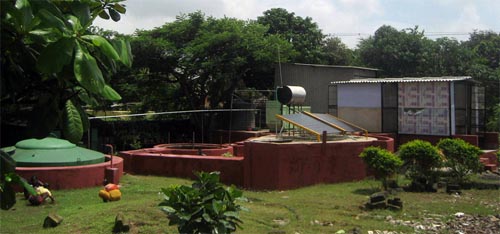
INTRODUCTION
Waste disposal is one of the major problems being faced by all nations across the world. City like Mumbai generates 7000-10,000 tones waste per day and proper disposal is essential to prevent pollution and maintain esthetics.
Out of this waste, glass, metals, some plastic and paper can be recycled. The biodegradable waste should be processed properly to maintain natural balance of essential elements in the environment.
Disposal of biodegradable waste resource can be achieved by several means like incineration, landfills, dumping in the dumping yards, composting etc. These methods have their own hazards. Incineration can lead to respiratory illnesses. Moreover, it may lead to disruption of biogeochemical cycles of several elements and will have long term effects on biosphere. Vermiculture has been used in recent past in urban area, however, it has limitations of space. One of the economic ways would be to install community based biogas plants for processing.
NISARGRUNA PROCESS
The waste resources which can be processed using Nisargruna Biogas plant include biodegradable kitchen waste, paper waste, green grass, leaf litter, animal remains in abattoirs, hospital waste, green plant waste, cow dung, crop residues, sugarcane, baggase, water hyacinth, etc.
The waste is first segregated carefully to remove non-biodegradable material and then homogenized to make a slurry. It is then processed in a sequential manner first by aerobic and then by anaerobic process. The products of the process are biogas consisting of methane, carbon dioxide and water vapor & weed free good quality manure. About 70% of Water can be recycled at the end of the process.
ADVANTAGES
Nisargruna Bio Gas Plant would serve many purposes such as:-
| 1 | Environment friendly disposal of waste, which is the need of the hour. |
| 2 | Generation of fairly good amount of fuel biogas, which will definitely support the dwindling energy resources. The gas can be used for as fuel in the kitchen or for power generation. |
| 3 | Generation of high quality, weed free manure, which is an excellent soil conditioner. This is very important for replenishing organic carbon in the undernourished soil after years of agriculture. |
APPLICATIONS
The Bio gas plants are useful for Municipal Corporations, Hospitals, Hotels, Housing Societies, Govt. Establishments, Abattoirs, Nagar Palika, Grampanchayat, Farmers. At present, 160 Nisargruna plants are functional in the country.
INFRASTRUCTURE REQUIRED
The following infrastructures is required for set-up a 1 tonne/day capacity Bio gas plant:-
| 1 | Space | : | ~ 100 m2 |
| 2 | Manpower | : | Two unskilled persons |
| 3 | Power supply | : | 3 phase AC |
| 4 | Water Supply | : | 1.2 kL for one tonne plant/day |
| 5 | Cost | : | ~ 16 lakhs rupees for 1 tonne/day capacity plant |
